

ArduPilot Boat
Rover firmware drives both boats and ground vehicles, with the same controller, the same ground station and the same tuning workflow. This page covers boats only: what the boat needs, which hulls are proven in the field, and which one to pick.
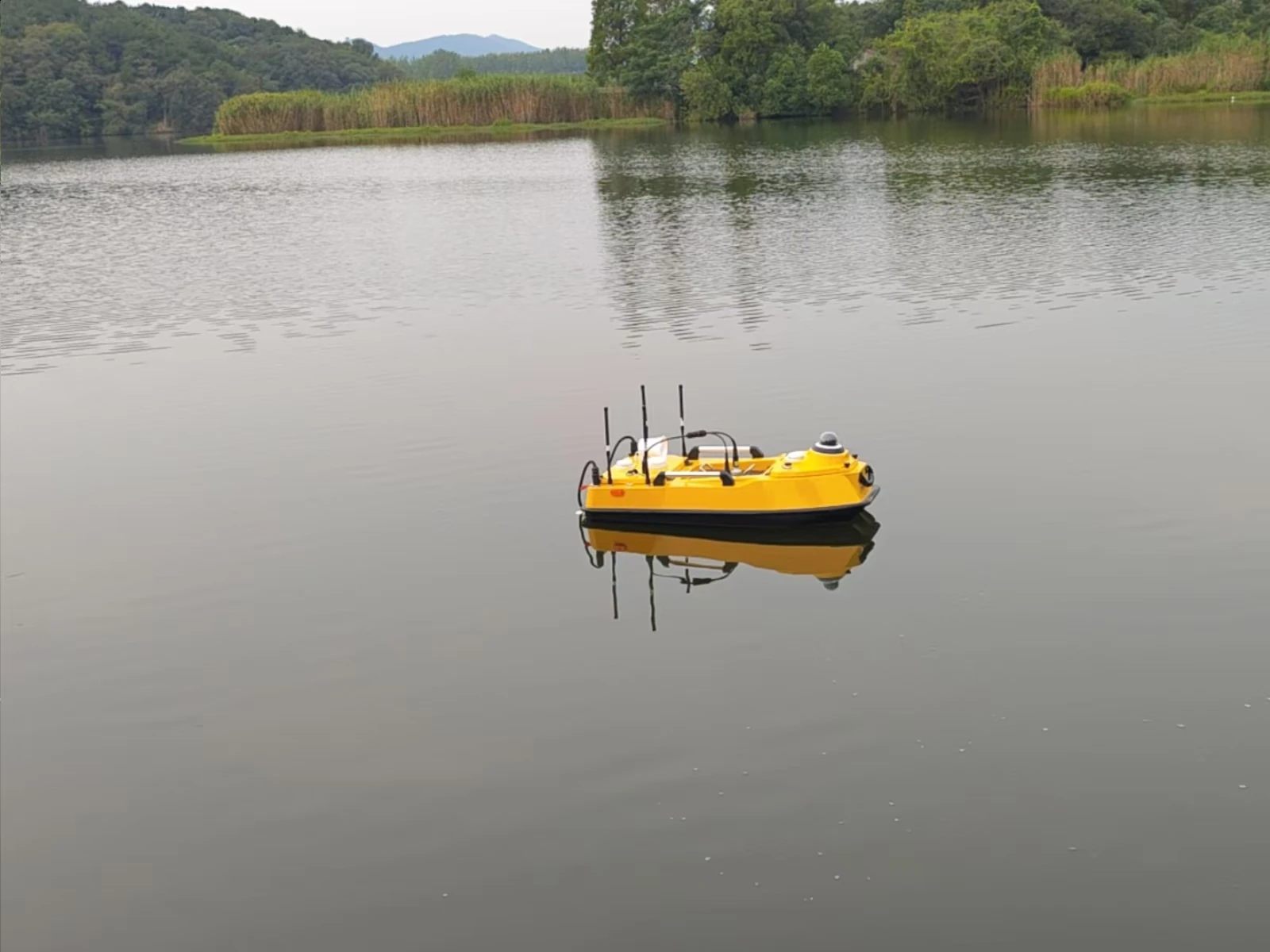
▲ A boat running Rover firmware
Required parts
A boat that actually runs needs the parts below on top of the hull itself.
| Item | Qty | Purpose |
|---|---|---|
| Hull and propulsion | 1 | Hull, thrust motor and propeller; a rudder-equipped hull also includes the steering servo |
| Controller | 1 | Runs Rover firmware; setting FRAME_CLASS to 2 makes it work as a boat |
| GNSS dual antenna | 1 | Position and heading; two antennas give the bow direction directly instead of relying on course estimation at low speed |
| Radio transmitter | 1 | Manual control and mode switching; failsafe also hands control back to it |
| Battery | 1 | Main power for the boat; voltage and capacity follow the propulsion ESCs |
| BEC | 1 | Steps the battery down to 5 V for the controller and receiver |
Hull types verified with ArduPilot
These hull types cover monohull, catamaran and sailboat forms, each proven in real operation.
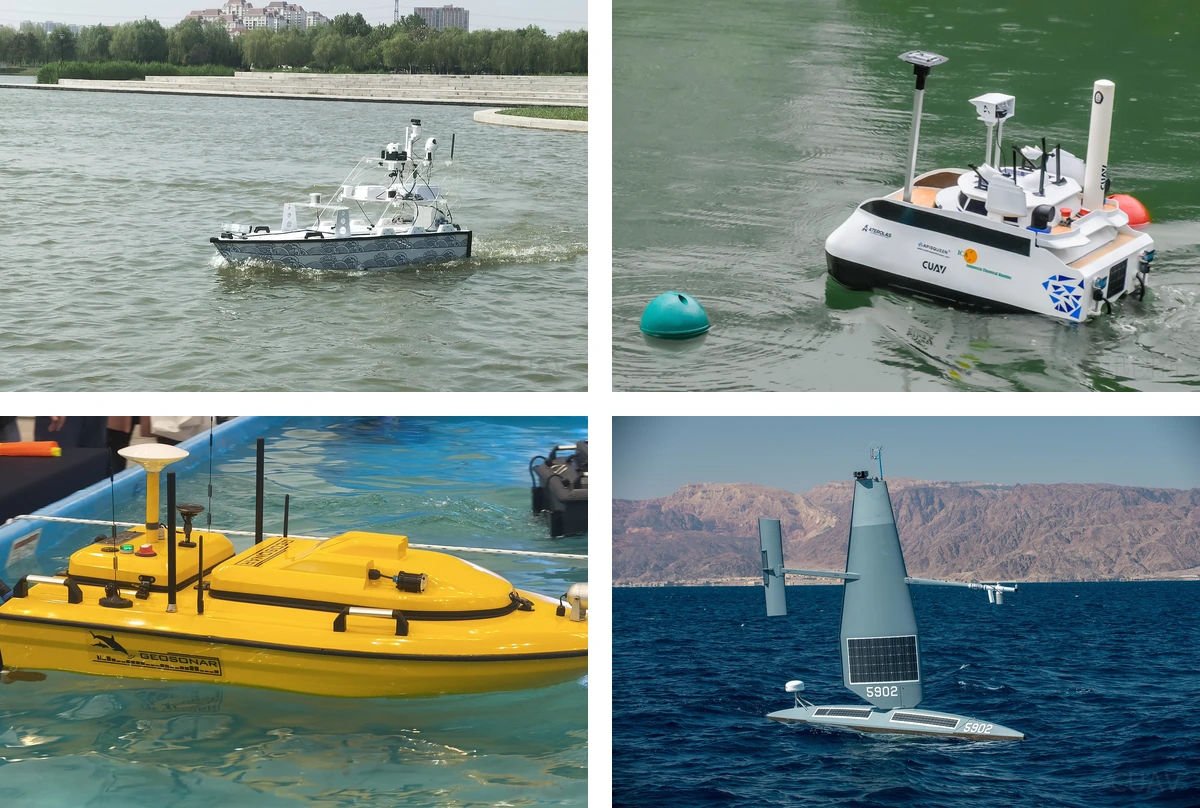
▲ Hull types verified with ArduPilot
Choosing a hull
- Rivers, lakes, canal inspection, calm water: single-hull differential. Simplest structure, turns in place.
- Long-section surveys that need speed in a straight line: single-hull rudder. Good straight-line stability, suits towed equipment.
- Open water, waves, depth sounding equipment: catamaran or trimaran. Noticeably better lateral stability.
- Long endurance, large areas, inconvenient battery swaps: sailboat mode. Endurance follows the wind and is not limited by battery capacity.
Live demo
▲ An unmanned boat cruising on water