

ArduPilot Rover
Rover firmware drives both ground vehicles and boats, with the same controller, the same ground station and the same tuning workflow. This page covers ground vehicles only: what the vehicle needs, which chassis are proven in the field, and which one to pick.
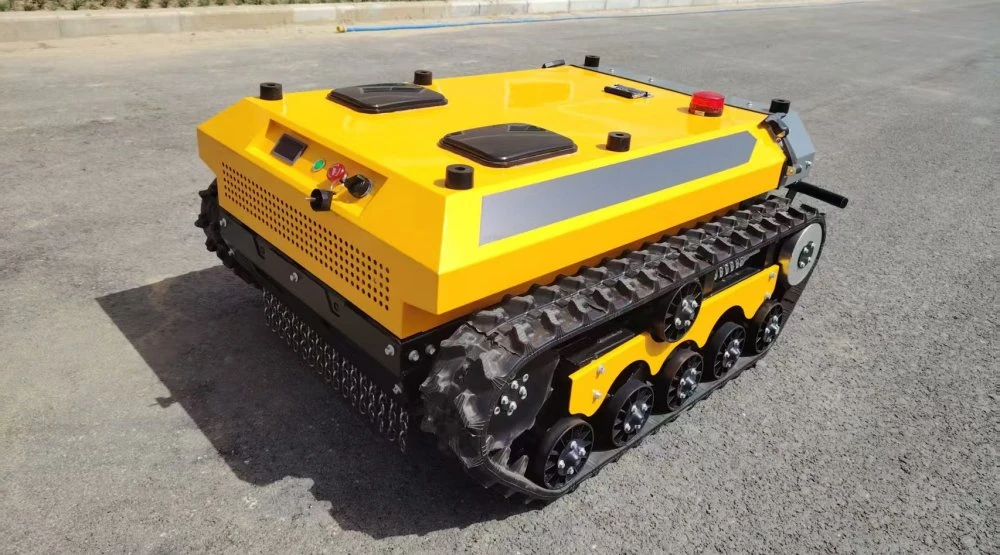
▲ A tracked rover running Rover firmware
Required parts
A rover that actually drives needs the parts below on top of the chassis itself.
| Item | Qty | Purpose |
|---|---|---|
| Rover chassis kit | 1 | Frame, drive motors and ESCs; an Ackermann kit also includes the steering servo |
| Controller | 1 | Runs Rover firmware and outputs steering and throttle |
| NEO series GPS | 1 | Position and heading; the module contains a compass, and auto modes depend on it |
| Radio transmitter | 1 | Manual control and mode switching; failsafe also hands control back to it |
| Battery | 1 | Main power for the vehicle; voltage and capacity follow the chassis ESCs |
| BEC | 1 | Steps the chassis battery down to 5 V for the controller and receiver |
Verified chassis models
Every chassis below has been validated by driving it in real use, covering differential (wheeled and tracked), Ackermann and omnidirectional types.
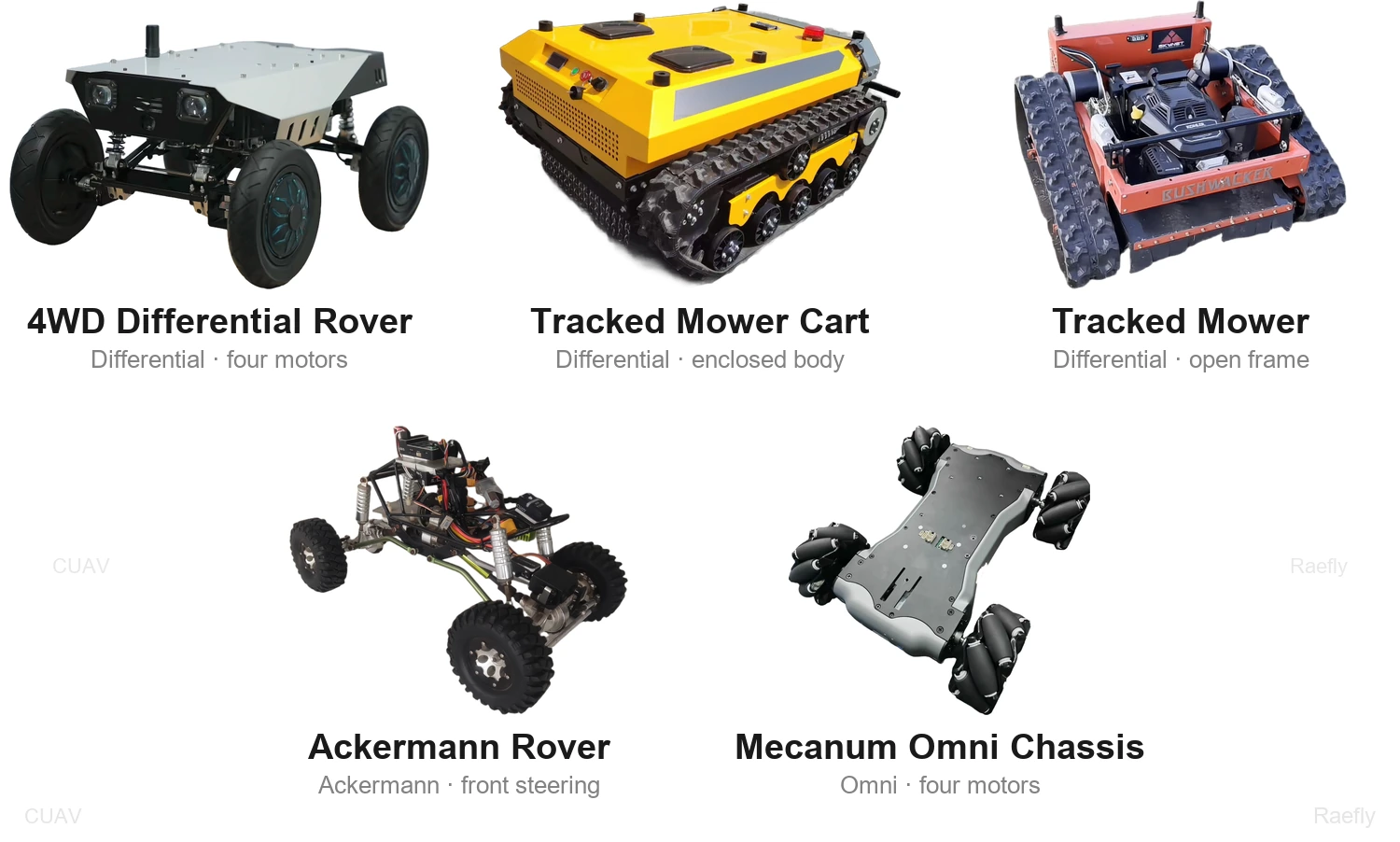
▲ Some of the chassis types that have been verified
Choosing a chassis
- Flat paved ground, tight spaces, needs to turn in place: differential chassis. Simplest structure, fewest parameters to tune.
- Long patrols, continuous surfaces, higher speed: Ackermann chassis with RTK. Better straight-line stability and a higher speed ceiling.
- Racking aisles or equipment bays that need lateral alignment: omnidirectional chassis. Four independently driven wheels allow sideways and diagonal motion.
- Teaching and control algorithm work: balance bot. Two wheels, a simple model, and obvious behaviour.
Vehicle demo
▲ A tracked chassis on a test track; the inset at the bottom right is the ground station position view